Physical Address
304 North Cardinal St.
Dorchester Center, MA 02124
Physical Address
304 North Cardinal St.
Dorchester Center, MA 02124

CREATIVE ECOSYSTEM
CREATIVE ECOSYSTEM
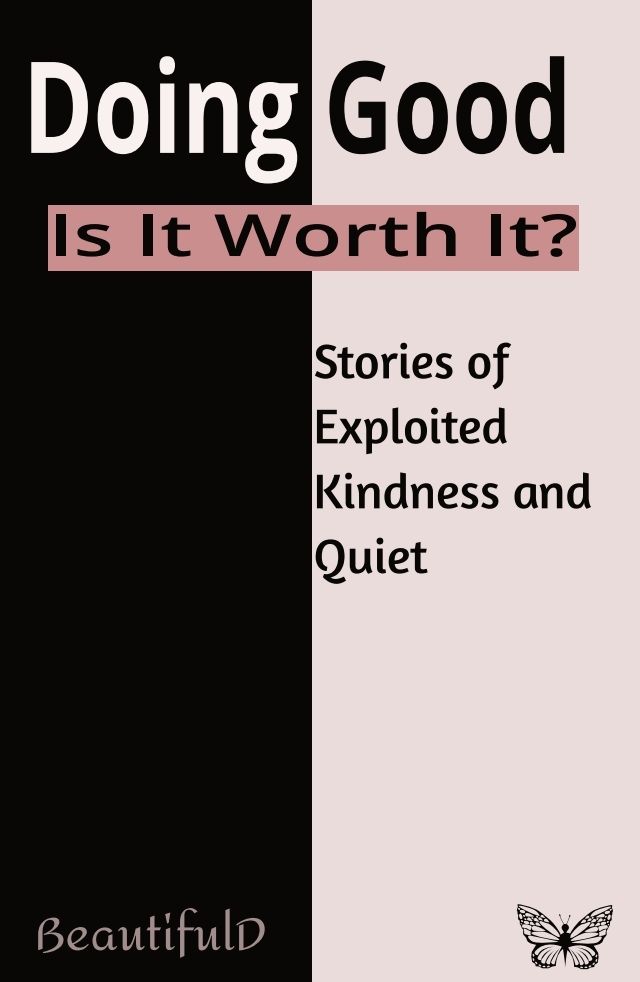
Most books about doing good tell us that kindness pays and goodness always returns to the giver. But what happens when it doesn’t.
If you’ve ever given more than you could afford—emotionally, financially, spiritually—and ended up with loss, confusion, or even betrayal, this book is written for you.
On paper, the people in Doing Good: Is It Worth It? look like the “good ones” in any community:
They are people like Tony, Selasie, Seth, Frank, Mark, Sue, Val, Harrison, Mensa, Meg, and Alex—ordinary believers in goodness whose choices, in almost any sermon or motivational talk, would be praised as “the right thing to do.”
Only here, their “reward” is not applause. It is prison, debt, suspicion, burnout, marital tension, violence, betrayal, or devastating grief.
Moral psychology keeps reminding us that altruism can be costly, and those costs are not just financial; they can cut into identity, trust, and mental health. This book puts real flesh and emotion on those abstract ideas.
Each story in Doing Good: Is It Worth It? circles around a question most of us have felt but rarely dared to voice:
“If doing the right thing keeps hurting me, am I still supposed to do it?”
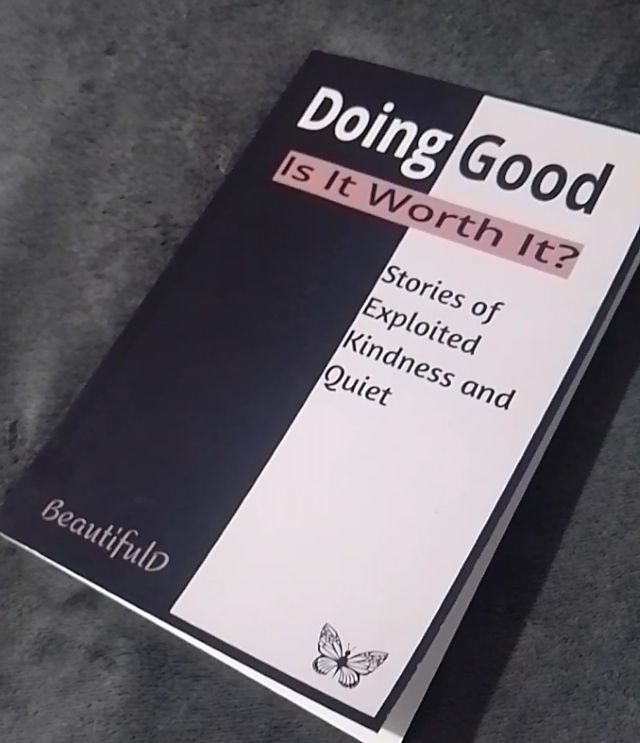
The book doesn’t give cheap answers. Instead, it walks you into situations where goodness and harm are tangled together:
These may sound as theoretical puzzles. Yet, they are questions that haunt people carrying what clinicians call moral injury and survivor guilt—the anguish of having tried to do right and paying a price that feels unbearably wrong.
There are at least three reasons this book stays with you long after you close it.
Many of us carry:
Reading these stories, you start recognizing your own internal knots: the resentment you feel guilty about, the instinct to close your hand, the quiet exhaustion behind your carefully managed smile.
The author doesn’t judge that tension. He looks it straight in the eye.
Most content about helping others pushes you toward one of two extremes:
Doing Good: Is It Worth It? stands on the uncomfortable ground in between. It never says “stop doing good,” but it also never pretends that goodness is risk‑free. It insists that wisdom and compassion have to be held together, even when that balance is excruciating.
There are no capes here, no flawless saints. Just:
That’s what makes the book so unsettling—and so strangely comforting. You recognize yourself, or someone you love, in almost every chapter.
This isn’t just a book for “nice people who give too much.” It’s for anyone who:
If you’re planning a small‑group study, a book club, or simply a personal season of reflection, each chapter of Doing Good: Is It Worth It? can serve as a starting point for honest, uncomfortable, necessary conversations.
At its heart, the book is not trying to make you bitter, nor to baptize self‑protection as the new highest virtue. It’s holding up a mirror made from other people’s pain and asking:
There are no neat formulas inside these pages, and that’s precisely why they feel honest.
If you’re ready for a book that:
…then Doing Good: Is It Worth It? deserves a place on your nightstand—and in your next deep conversation.
You can explore the book here on Amazon:
👉 Doing Good: Is It Worth It?
(Using that affiliate link also supports the work of beautifuld.org at no extra cost to you.)
On beautifuld.org, the mission is to explore beauty in broken places—faith, relationships, justice, everyday courage. Doing Good: Is It Worth It? fits right into that calling. It doesn’t tie your questions up with a bow. It walks with you while you carry them.
Maybe the most important thing it offers is not an answer, but a more honest way to live the question.
When the next request for help comes—and it will—this book will already be in the room with you.